
EcoWorks Leads Detroit’s Push Toward Carbon-Free Buildings
EcoWorks, a Detroit nonprofit, is leading efforts toward carbon-free buildings while the Detroit 2030 District celebrates strides in energy efficiency among commercial properties. However, challenges remain in funding and adoption.
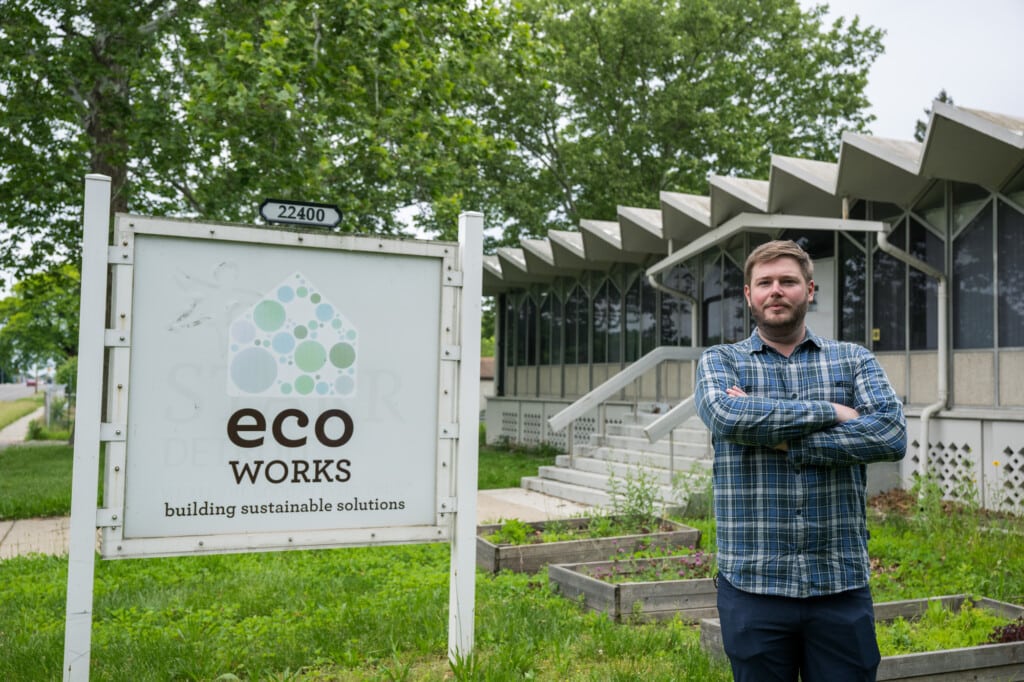
Based on Detroit’s 7 Mile Road, EcoWorks is transforming its historic building with energy-efficient technologies. Recent upgrades include a modern heating and cooling system and solar panels, supported by a $500,000 loan from Michigan Saves, a nonprofit green bank. These improvements aim to cut the building’s utility costs by 50%. “Things were inefficient, with high utility bills,” said Henrik Mader, EcoWorks’ energy analyst, who hopes these updates model a sustainable, carbon-free future.
The Detroit 2030 District helps building owners adopt sustainable practices and hosted its annual Energy Challenge Awards, recognizing significant energy consumption reductions. Winners included Shelborne Development for a nearly 60% reduction at The Beach Club Detroit Apartments and Fifth Third Bank for a 21% reduction at its 8 Mile & Livernois branch.
While many Detroit building owners are adopting energy-efficient solutions, financing remains a key barrier. Experts emphasize the significant potential for cost and energy savings in retrofitting commercial buildings with renewable technologies. Fortunately, tools like green bank loans are helping pave the way for more widespread adoption.
Energy efficiency has the potential to halve energy use and greenhouse gas emissions by 2050, with retrofitting buildings playing a critical role. In Detroit, buildings account for 68% of the city’s greenhouse gas emissions. The city aims to cut emissions from city sources by 35% by 2024 and citywide emissions by 2025.
Efforts like EcoWorks’ building upgrades—new heating systems, insulation, and solar panels—demonstrate the impact of energy retrofits, reducing utility costs by 50%. Programs like Michigan Saves and Property Assessed Clean Energy (PACE) provide financing for these projects, making upgrades more accessible for owners.
Detroit’s 2030 District is encouraging sustainable practices, helping 373 building owners track energy and water use, and recognizing top performers in energy reduction. Yet, barriers like financing and competing priorities remain challenges.
Policy measures like utility benchmarking and building performance standards could accelerate progress. These initiatives track energy use, identify high and low performers, and establish targets for improvement, similar to programs in Ann Arbor, Chicago, and Washington, D.C.
Expanding these efforts, combined with more widespread adoption of energy-efficient practices, could help Detroit achieve its climate goals and serve as a model for equitable decarbonization.