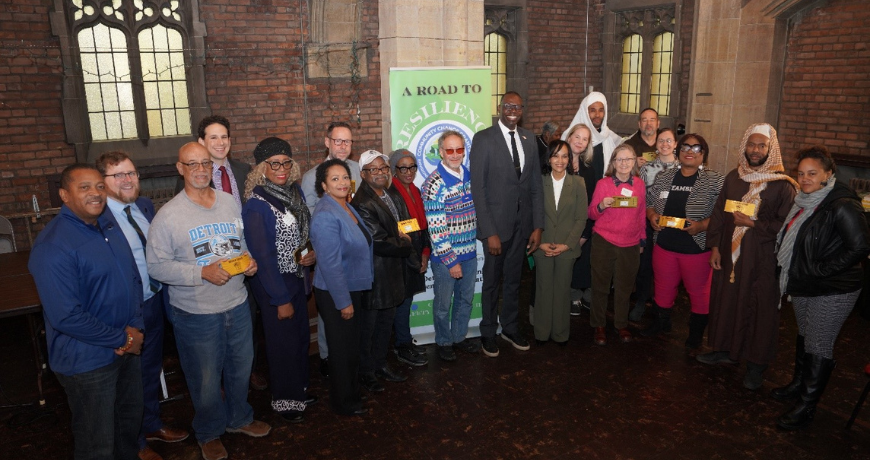
The Justice40 Accelerator program supports President Biden’s Justice40 Initiative, which aims to direct 40% of specific federal investments to underresourced communities burdened by pollution.
Seven Detroit-based environmental justice nonprofits, including EcoWorks, Eastside Community Network, and Green Door Initiative, are receiving technical assistance through the program. The Accelerator, funded by private philanthropies and operated by groups like Elevate and Groundswell, aids over 100 climate-focused organizations led by Black, Brown, and Indigenous leaders across 35 states and territories.
Stacey Grant, a program navigator, helps organizations prepare for federal funding by building capacity for community-driven climate solutions, such as clean energy and food justice projects.
Studies highlight disproportionate pollution exposure in Black communities. For example, a 2017 NAACP report found Black Americans are 38% more exposed to polluted air than white Americans and 75% more likely to live near polluting industrial sites. In Detroit, air pollutants like those from the Stellantis Jeep plant contribute to significant health issues annually.
The Green Door Initiative used the Accelerator’s guidance to assess its challenges and prepare for federal grants, positioning itself for success in advancing environmental justice initiatives.
Green Door Initiative’s CEO, Donelle Wilkins, credited the program for growing their budget from $300,000 in 2020 to $4 million, enabling them to compete for federal resources. Studies highlight Detroit’s urgent need for action, with pollutants causing significant health issues, particularly in majority-Black neighborhoods.

The Green Door Initiative, recognized by the Department of Energy and EPA, has expanded its green workforce program with support from the Justice40 Accelerator. CEO Donelle Wilkins said they now train over 100 people annually, placing 90% in jobs like solar panel installation and hazardous waste handling.
Justice40 also helped Detroit Future City secure a $30,000 grant to research climate-resilient land use. To date, over $2 million has gone to Michigan participants, with more funding expected as federal programs ramp up.
Despite progress, challenges remain, including slow fund rollout and complex grant processes. Advocates call for more support to help underresourced communities access Justice40 resources effectively.